 Jason@leap-ic.com
 Upload BOM
LR44 vs 357 Battery: Specs, Silver Cells, Interchange and Applications
11/14/2025 7:27:37 PM
Button batteries all look alike when you pour them out on the table. LR44, 357, 303… same shiny metal can, same size, same feel. But if you drop the wrong one into a watch or a medical tool, the device might start acting strangely or die much sooner than expected. This is why understanding LR44 vs 357 battery is worth a few minutes of your time.
In this guide we'll walk through the key points in plain language: chemistry, specs, how long they last, where they are used, how they relate to the 303 battery, and when you can safely interchange them. We will also touch on common cross-reference names from popular brands like Energizer so you can match the right button battery to your device with confidence.
1. Are LR44 and 357 Batteries the Same Thing?
Both LR44 and 357 are small button batteries with the same standard size:
- Diameter: approx. 11.6 mm
- Height: approx. 5.4 mm
They will physically fit into the same battery compartment. That's exactly why so many people assume they are identical. The important difference is on the inside:
- LR44 Battery – Alkaline chemistry, lower cost, shorter life, more voltage drop over time.
- 357 Battery – Silver-oxide chemistry, often marked as SR44, more stable voltage, longer life, higher price.
So the question is not just "will it fit?" but "will it work properly for the whole life of the battery?" To answer that, we need to look at each cell in more detail.
2. What Is LR44 Battery?
2.1 Chemistry and Voltage
LR44 is an alkaline button cell. Typical electrical characteristics:
- Nominal voltage: around 1.5 V
- Initial open-circuit voltage: about 1.55–1.60 V
- Cutoff voltage: usually around 1.1 V
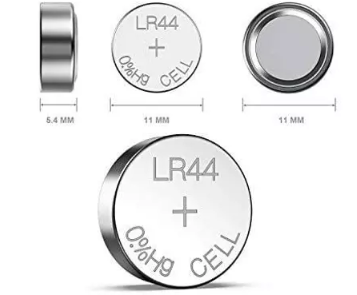
As the LR44 discharges, the voltage drops gradually. The discharge curve is sloped: the longer you use it, the lower the voltage. Devices that are sensitive to voltage changes may show weaker display, dimmer light, or slower response as time goes on.
2.2 Specs and Typical Performance
Exact specs vary by brand, but typical LR44 performance looks like this:
- Capacity: roughly 110–130 mAh under light load
- Discharge profile: noticeable downward slope over the whole life
- Operating temperature: approx. 0°C to 60°C
- Shelf life: about 3–5 years in normal storage
LR44 is often the first choice when the device is inexpensive and not very demanding: small toys, basic laser pointers, simple LED gadgets, cheap keychain tools, and similar electronics.
2.3 Advantages and Limitations
Pros of LR44:
- Lower price compared to silver-oxide cells
- Easy to find in supermarkets, electronics shops, and online
- Good enough for many casual applications
Cons of LR44:
- Shorter service life than a 357 in the same device
- Voltage drops steadily during use
- Not ideal for precision timing or measuring devices
3. What is 357 Battery?
3.1 Chemistry and Voltage
The 357 battery is a silver-oxide button cell. Depending on the manufacturer you will see codes such as:
- 357
- SR44 or SR44W
- In Energizer's own reference: Energizer 357/303
The electrical side looks like this:
- Nominal voltage: approx. 1.55 V
- Initial open-circuit voltage: about 1.55–1.60 V
- Cutoff voltage: around 1.2 V
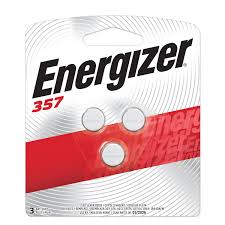
The key point is the shape of the discharge curve. Silver-oxide cells are known for a nearly flat voltage profile. The output stays very close to 1.55 V through most of the battery's life, then drops off quickly near the end. For devices that rely on stable voltage, this is a big advantage.
3.2 Specs and Performance
Again, exact values depend on the brand and model, but typical 357/SR44 specs are:
- Capacity: about 150–200 mAh depending on load
- Discharge profile: very flat and stable until near depletion
- Operating temperature: roughly -10°C to 70°C
- Shelf life: around 5–10 years
In other words, where LR44 is "good enough" for casual gadgets, 357 is the "no-nonsense" choice for instruments, watches and medical devices.
3.3 Advantages and Limitations
Pros of 357:
- Higher capacity than LR44 in the same size
- Very stable voltage output, crucial for accurate electronics
- Long shelf life and predictable performance
Cons of 357:
- Higher cost compared to alkaline LR44
4. LR44 vs. 357: Difference in Specifications
To make the difference clearer, here is a side-by-side comparison of the main specs:
| Feature | LR44 (Alkaline) | 357 / SR44 (Silver-Oxide) |
|---|---|---|
| Chemistry | Alkaline | Silver-Oxide |
| Nominal Voltage | 1.5 V | 1.55 V |
| Capacity (typical) | 110–130 mAh | 150–200 mAh |
| Voltage Profile | Gradual decline | Flat and stable |
| Shelf Life | 3–5 years | 5–10 years |
| Best Use | Toys, simple LEDs, low-cost gadgets | Watches, meters, medical devices |
| Price Level | Cheaper | More expensive |
| High-Drain Capability | Limited | Good |
5. Functional Comparison: What Changes in Real Use?
5.1 Voltage Behaviour
The most important functional difference between LR44 and 357 is how they behave as they age:
- With LR44, voltage slowly slides down. Devices may still "work" but with reduced brightness or accuracy.
- With 357, the voltage stays almost constant until the cell is nearly empty, then it drops quickly at the end.
For a wall clock or a toy, the gradual decline is not a big problem. For a digital caliper, a medical thermometer, or a watch, that slow drift can mean incorrect readings or unreliable operation.
5.2 Load and Current Draw
Silver-oxide 357 cells handle higher or more continuous loads better. They are designed to keep voltage stable even when the device draws more current. This is why many "high drain" devices explicitly call for SR44 or 357.
6. LR44 vs. 357: Difference in Applications
6.1 Typical LR44 Applications
LR44 is usually chosen for low-cost or non-critical devices, for example:
- Simple toys and novelty items
- Entry-level laser pointers
- Small LED keychain flashlights
- Basic remote controls
- Seasonal decorations and gadgets
6.2 Typical 357 Applications
The 357 battery, thanks to its silver-oxide chemistry, is favored for:
- Analog and digital watches
- Digital calipers and micrometers
- Medical thermometers and some glucose meters
- Precision timers and measuring tools
- Professional laser modules and pointers
When manufacturers print "silver-oxide only" in the manual, they are effectively saying "use 357/SR44 or equivalent, do not drop in an LR44."
7. LR44 vs. 357: Difference in Battery Life
Under similar conditions, you can expect a 357 battery to last noticeably longer than an LR44 in the same device. There is no single exact number because usage patterns vary, but in practical terms:
- Battery life for 357 is often 30–50% longer than LR44 under comparable loads.
- Performance remains stable for most of that time thanks to the flat discharge curve.
- LR44 slowly weakens, so some devices feel "half-dead" long before the battery is truly empty.
If you want a "fit it and forget it" solution for a watch or instrument, 357 is usually the smarter investment, even at a higher upfront cost.
8. Relationship Between LR44, 357, and 303?
Things get more confusing when we add 303 into the mix, as well as all the different code names on packaging. A quick reference list helps:
8.1 LR44 Cross-Reference
LR44 is an alkaline button cell. Common interchangeable codes include:
- LR44
- A76
- AG13
- L1154 (and similar formats)
8.2 357 and 303 Cross-Reference
Both 357 and 303 are silver-oxide cells with the same size as LR44, but they are designed for different drain profiles:
- 357 – High drain silver-oxide cell; often labeled SR44 or SR44W.
- 303 – Low drain silver-oxide cell; typically aimed at devices like analog watches that draw tiny current continuously.
Many brands, including Energizer, use a combined code like "Energizer 357/303" to indicate that the cell can handle both high-drain and low-drain roles. It is essentially a dual-purpose silver-oxide button cell.
8.3 Interchange and Compatibility
When it comes to interchange, here are the simple rules:
- 357 ↔ 303: usually interchangeable; both are silver-oxide with similar specs.
- 357 ↔ LR44: physically compatible; electrically, 357 is superior and a safe upgrade in most cases.
- LR44 instead of 357: not recommended in sensitive or critical devices, because of shorter life and voltage drop.
If the device label or manual explicitly calls for "SR44", "357" or "silver-oxide", treat that as your primary reference and avoid swapping in an LR44 unless it's an emergency.
9. FAQ
Q1. Can I use LR44 instead of 357?
Physically, yes, it fits. Electrically, it is a compromise. In simple toys or lights, it may be fine. In watches, meters, and medical tools, using LR44 instead of 357 can mean shorter battery life and unstable readings. If the device is important, stick with 357/SR44.
Q2. Why is the 357 battery more expensive than LR44?
357 uses silver-oxide chemistry, which costs more to produce but offers higher capacity, better voltage stability, and longer service life. You pay more upfront, but you often replace it less often.
Q3. Are LR44 and A76 the same thing?
Yes. A76 is one of the standard reference codes for the same alkaline button cell. Depending on the brand, you might see LR44, A76, AG13 or L1154 printed on the package.
Q4. Is 357 better for watches?
For most watches, especially analog ones, yes. The constant voltage of the silver-oxide 357 cell keeps the movement accurate and stable. That is why most watch makers specify silver-oxide cells rather than alkaline LR44.
Q5. What about Energizer 357/303? Is that different?
Energizer 357/303 is a silver-oxide button cell that can serve in both high-drain (357-style) and low-drain (303-style) roles. It follows the same size and basic specs but is tuned to work well across a wider range of loads.
Q6. Can I mix LR44 and 357 in the same device?
No. Mixing alkaline and silver-oxide cells in the same device is a bad idea. The cells do not discharge the same way and can end up stressing each other. Always replace all batteries in a multi-cell device with the same type, brand and age.
10. Final Thoughts
When it comes to LR44 vs 357 battery, the size is the same but the story is different. LR44 is a budget-friendly alkaline choice suited to simple gadgets, while 357 is a silver-oxide workhorse built for precision and long-term reliability.
If you just want to power a toy or a small flashlight, LR44 will do the job. If you're keeping a watch on time, relying on a measuring instrument, or protecting your health with a medical device, 357 – or a 357/303 silver-oxide equivalent from a reputable brand like Energizer, Murata, Renata, Maxell or Toshiba – is the safer, smarter option.

- Help you to save your cost and time.

- Reliable package for your goods.

- Fast reliable delivery to save time.

- Quality premium after-sale service.


 Online